Best Keloid Scar Treatment Creams for Smoother, More Even Skin
Finding an effective keloid scar cream involves balancing silicone-based science with practical daily use. The following selections are commonly recommended for reducing raised scar tissue from piercing, surgery, burns, and acne. This guide highlights the most relevant options, contrasting their active approaches, convenience, and expected outcomes to help you choose a product that fits your skin and lifestyle.
Summary Table of Chosen Products
| Product | Brand | Form | Key Benefit |
|---|---|---|---|
| Tobcharm Advanced Keloid Bump Removal Gel | Tobcharm | Gel | Clinically backed silicone gel with scar sheet synergy |
| Mederma PM Intensive Overnight Scar Cream | Mederma | Cream | Nighttime action aligning with skin regeneration |
| Cicatricure Advanced Scar Gel | Cicatricure | Gel | Visible results in weeks for various scar types |
| Mitgary Advanced Scar Gel | Mitgary | Gel | Triple-action silicone formula for multiple scar issues |
| Kelo-cote Advanced Formula Scar Gel | KELO-COTE | Gel | Clinically tested, self-drying, colorless scar management |
Tobcharm Advanced Keloid Bump Removal Gel

Advanced Silicone Gel for Keloid Scar Removal: This silicone-based formula targets keloid and hypertrophic scars from piercings, surgery, and acne. It is designed to flatten raised scar tissue and reduce redness, supporting natural skin healing. When paired with silicone scar sheets, the gel enhances tissue softness and smoothness to accelerate improvement over time.
Mederma PM Intensive Overnight Scar Cream

Overnight Scar Care That Works With Nighttime Regeneration: This product is formulated to act while you sleep, helping to visibly reduce scar appearance caused by acne, surgery, burns, and injuries. Its triple-action formula aims to lock in moisture, support collagen production, and renew skin cells for improved texture and color. Paraben-free and clinically oriented for noticeable results in about two weeks for many users.
Cicatricure Advanced Scar Gel

Clinically Oriented Scar Reduction: Cicatricure Advanced Scar Gel focuses on improving both non-keloid and hypertrophic scars. It is positioned for adults and children and claims visible results within two weeks by reducing scar appearance, improving skin hydration, and enhancing overall texture. It targets scars from surgery, acne, burns, and injuries with emphasis on facial applications.
Mitgary Advanced Scar Gel

This silicone scar gel is designed to treat old and new scars across the body and face, including keloid bumps, stretch marks, and post-surgical marks. Features a triple-action approach to support collagen formation, cell renewal, and moisture retention, helping to soften and flatten scar tissue over time. It is described as suitable for daily use on multiple skin areas and is gentle enough for sensitive skin.
Kelo-cote Advanced Formula Scar Gel
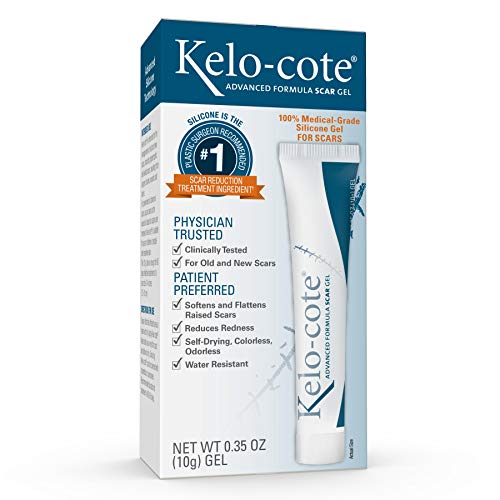
Kelo-cote’s clinically tested silicone scar gel reduces redness and helps flatten raised scars. It is self-drying, colorless, and non-greasy, making it suitable to wear under makeup. Its effectiveness and patient preference are highlighted in studies, with a focus on both old and new scars and suitability for children and sensitive skin.
All products listed above are silicone-based treatments commonly recommended for keloid and raised scar concerns. Individual results vary by skin type, scar age, and consistency of application. Consult with a dermatologist if you have a history of severe scarring or irritation from topical products.
Buying Guide: Key Purchase Considerations
- Scar type and age: Younger, newer scars often respond faster to silicone-based therapies, while older, more established scars may require longer treatment and possibly combination approaches.
- Form and comfort: Gels tend to dry quickly and are discreet for daytime use, while creams may offer richer moisturization at night. Consider your daily routine and whether you prefer a product that can be worn under makeup.
- Usage pattern: Most silicone-based scar treatments require consistent daily application, typically twice a day, for several weeks to months. Set reminders to maintain adherence and maximize results.
- Sun exposure: Some scar treatments can be more effective when paired with sun protection, as UV exposure can affect scar color and healing. Use broad-spectrum SPF on treated areas when outdoors.
- Safety and skin sensitivity: Look for paraben-free and fragrance-free options if you have sensitive skin. Start with a patch test to monitor for irritation.
- Product compatibility: If you use other topical medications, ensure there are no conflicts with silicone-based products. In some cases, layering order can affect absorption and results.
- Cost and convenience: Larger tubes or multi-pack offerings may provide better value for long-term use. Check whether the product is easy to apply to small areas like the ears or face in addition to larger areas.
- Clinical support: Consider products that cite clinical testing or dermatologist recommendations, especially for more challenging scars such as keloids and post-surgical marks.
Additional notes: The list above emphasizes silicone-based therapies, a cornerstone in scar management for many users. Individual results will vary, and some patients may benefit from additional interventions such as pressure therapy, laser treatments, or prescribed medications under medical supervision.